How to Prepare a Quote-Ready Custom Packaging Project Brief
Huasheng Packaging Technical Content Review · Published:
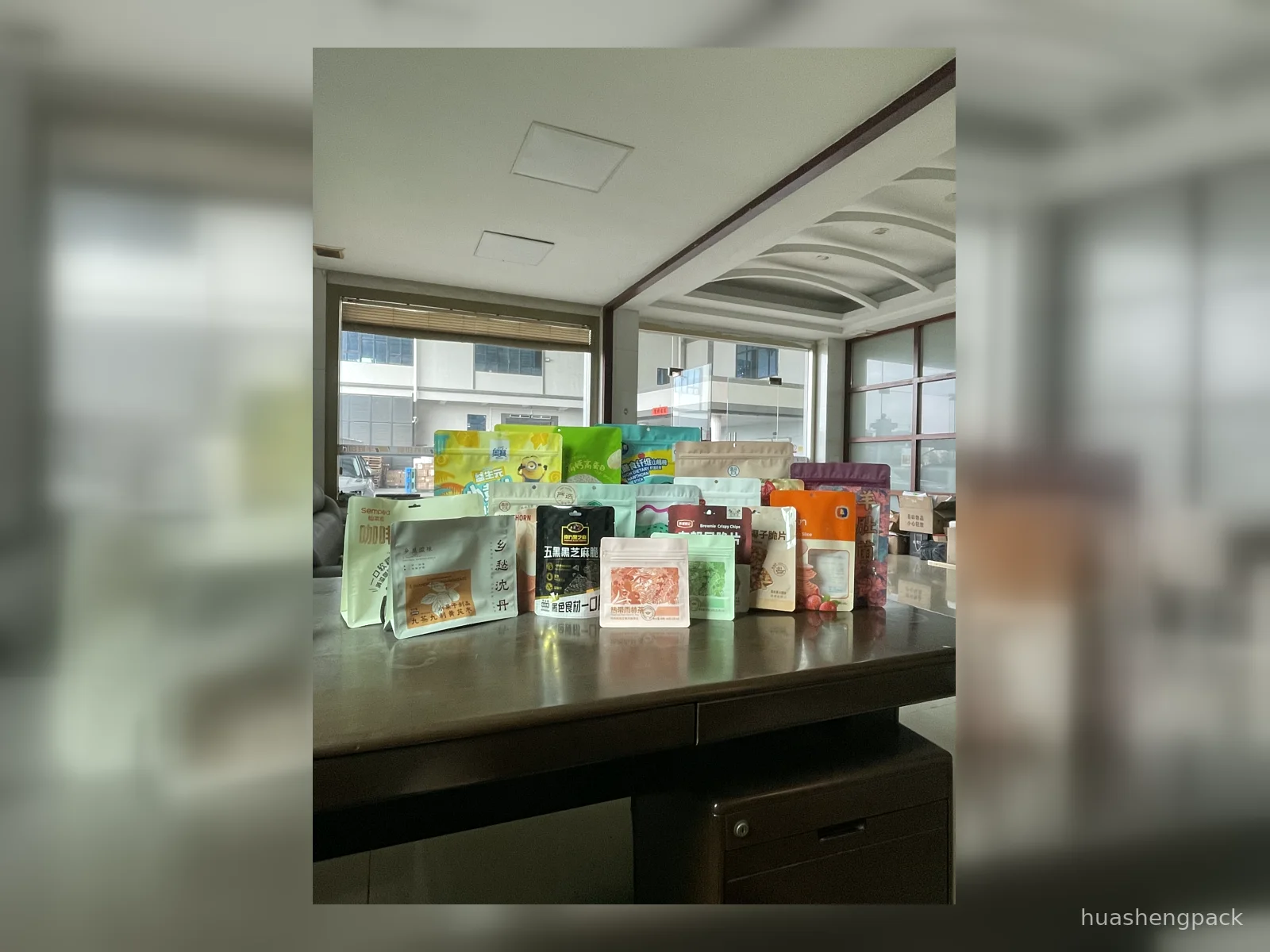 The image supports visible appearance or setting only. It does not prove material structure, performance, certification, a customer relationship or project suitability.
Organize product, format, size, artwork, quantity by SKU, filling process, destination and delivery scope before requesting a quotation.
Direct answer
A useful flexible-packaging quotation compares the same product, construction scope, size, artwork count, quantity basis, filling process and delivery responsibility. Missing inputs should create questions, not invented defaults. This guide turns an early inquiry into a controlled project brief without publishing fixed prices, MOQ or lead time.
Evidence-reviewed technical guide
2026-08-31 · Huasheng Packaging Technical Content Review
Evidence scope
How to Prepare a Quote-Ready Custom Packaging Project Brief
Scope and limitations
No customer identity, transcript, order-specific price, fixed MOQ, universal material recipe, performance promise, machine approval or shelf-life guarantee is published.
Key takeaways
- State product form, contact type, key sensitivities, target market, intended shelf-life objective, filling or thermal process and storage route. Mark unknowns clearly. A broad phrase such as “food-grade high barrier” does not define the exact contact or performance requirement.
- List quantity by size and artwork rather than one combined total. Note shared structures and truly shared print elements, but do not assume different designs can be pooled into one production minimum. Include current artwork status, languages, barcode ownership and revision.
- The factory should return missing inputs, assumptions, exclusions, alternatives and validation needs before a formal commercial offer. Keep any internal estimate separate from customer-facing approval. If product, size, quantity, structure, artwork or delivery scope changes, refresh the quotation.
1. Identify the Product and Intended Use
State product form, contact type, key sensitivities, target market, intended shelf-life objective, filling or thermal process and storage route. Mark unknowns clearly. A broad phrase such as “food-grade high barrier” does not define the exact contact or performance requirement.
The image supports visible appearance or setting only. It does not prove material structure, performance, certification, a customer relationship or project suitability.2. Define Format and Dimensions
Use a drawing or marked sample to define width, height, gussets, seal areas, zipper, spout, handle, notch or roll-film repeat. State whether dimensions are targets or approved. For powders or irregular products, provide bulk density or a representative filled sample.
3. Separate Each SKU and Artwork
List quantity by size and artwork rather than one combined total. Note shared structures and truly shared print elements, but do not assume different designs can be pooled into one production minimum. Include current artwork status, languages, barcode ownership and revision.
Use one row per size and artwork. Required columns should include product, target market, format, controlled dimensions or density trial, closure and accessories, structure status, filling process, artwork revision, quantity, sample requirement, delivery term, named place and open questions. Mark every value as buyer-confirmed, sample-measured, factory-proposed or unknown so a draft assumption cannot silently become a commercial commitment.
4. Normalize Commercial Scope
Ask quotations to separate unit basis, printing or setup, cylinders where applicable, samples, packing, taxes if relevant, delivery term, named place, currency and validity. Incoterms allocate tasks, costs and risks; quotes using different rules or named places are not directly comparable.
Before comparing offers, run a normalization pass. Convert quantities to the same per-SKU and per-artwork basis; align size definitions, thickness units, closure scope, printing finish, packing method, sample scope, currency, Incoterm version and named place. Separate confirmed values from alternatives and allowances. Ask each supplier to mark exclusions and buyer-supplied items. A lower total may omit cylinders, freight, zipper, outer cartons, proofing or a validation step. The comparison should expose those differences instead of assuming every line describes the same deliverable.
5. Issue Questions Before Numbers
The factory should return missing inputs, assumptions, exclusions, alternatives and validation needs before a formal commercial offer. Keep any internal estimate separate from customer-facing approval. If product, size, quantity, structure, artwork or delivery scope changes, refresh the quotation.
A quote-ready state does not mean technically approved. It means the commercial scope is comparable and every unresolved technical item is visible. Return alternatives as separate lines, state validity and exclusions, and identify which sample or trial closes each condition. If size, artwork count, quantity, material, filling route or delivery scope changes, invalidate the affected price rather than editing the old total without trace.
Professional evidence used in this guide includes: ICC Incoterms Rules; ASTM F2203-13(2022): Linear Measurement Using Precision Steel Rule; ISO 3664:2025 Graphic Technology and Photography — Viewing Conditions; ROVEMA VFFS Application Questionnaire. Its mapped scope is: Incoterms allocate delivery tasks, costs and risks; Linear dimensions require a defined specimen state and method; Critical comparison of printed media uses controlled viewing conditions; Product, package, film, reel, sealing and output inputs belong in one machine brief. These sources answer specific method, use-condition or equipment-input questions; they do not automatically approve the complete package, a particular machine, commercial shelf life or the current order. To apply this guide to a Packaging Inquiry decision, maintain a four-column condition–evidence–limitation–action record: state the current condition, identify the sample or record supporting it, name the risk that remains outside that evidence and assign the next action with its acceptance condition. Reopen the affected conclusion whenever the product, specification, process or controlling evidence changes.
Related Products
Related Packaging Guides
Claim-to-source evidence matrix
| Reviewed claim | Support | Sources | Boundary |
|---|
| Incoterms allocate delivery tasks, costs and risks | direct | [1] | The cited source supports only the named method, boundary or equipment input and does not approve the complete packaging project. |
| Linear dimensions require a defined specimen state and method | direct | [2] | The cited source supports only the named method, boundary or equipment input and does not approve the complete packaging project. |
| Critical comparison of printed media uses controlled viewing conditions | direct | [3] | The cited source supports only the named method, boundary or equipment input and does not approve the complete packaging project. |
| Product, package, film, reel, sealing and output inputs belong in one machine brief | direct | [4] | The cited source supports only the named method, boundary or equipment input and does not approve the complete packaging project. |
JSON · CSV
Authoritative References
- ICC Incoterms Rules · International Chamber of Commerce · technical-organization
Incoterms allocate delivery tasks, costs and risks - ASTM F2203-13(2022): Linear Measurement Using Precision Steel Rule · ASTM International · standard
Linear dimensions require a defined specimen state and method - ISO 3664:2025 Graphic Technology and Photography — Viewing Conditions · International Organization for Standardization · standard
Critical comparison of printed media uses controlled viewing conditions - ROVEMA VFFS Application Questionnaire · ROVEMA North America · manufacturer-data
Product, package, film, reel, sealing and output inputs belong in one machine brief
Frequently Asked Questions
Can one total quantity cover many artworks?
Only if the current factory review explicitly allows it.
Should MOQ be copied from the website?
No, current project inputs require review.
What if dimensions are unknown?
Provide product, density and a size-trial request.
Why state destination country?
It affects labeling, route and delivery scope.
Are EXW and delivered prices comparable?
No, normalize responsibility and named place.
When does a quote expire?
Use the validity stated in the current quotation.