Gravure Printing Guide for Custom Flexible Packaging
Huasheng Packaging Technical Content Review · Published:
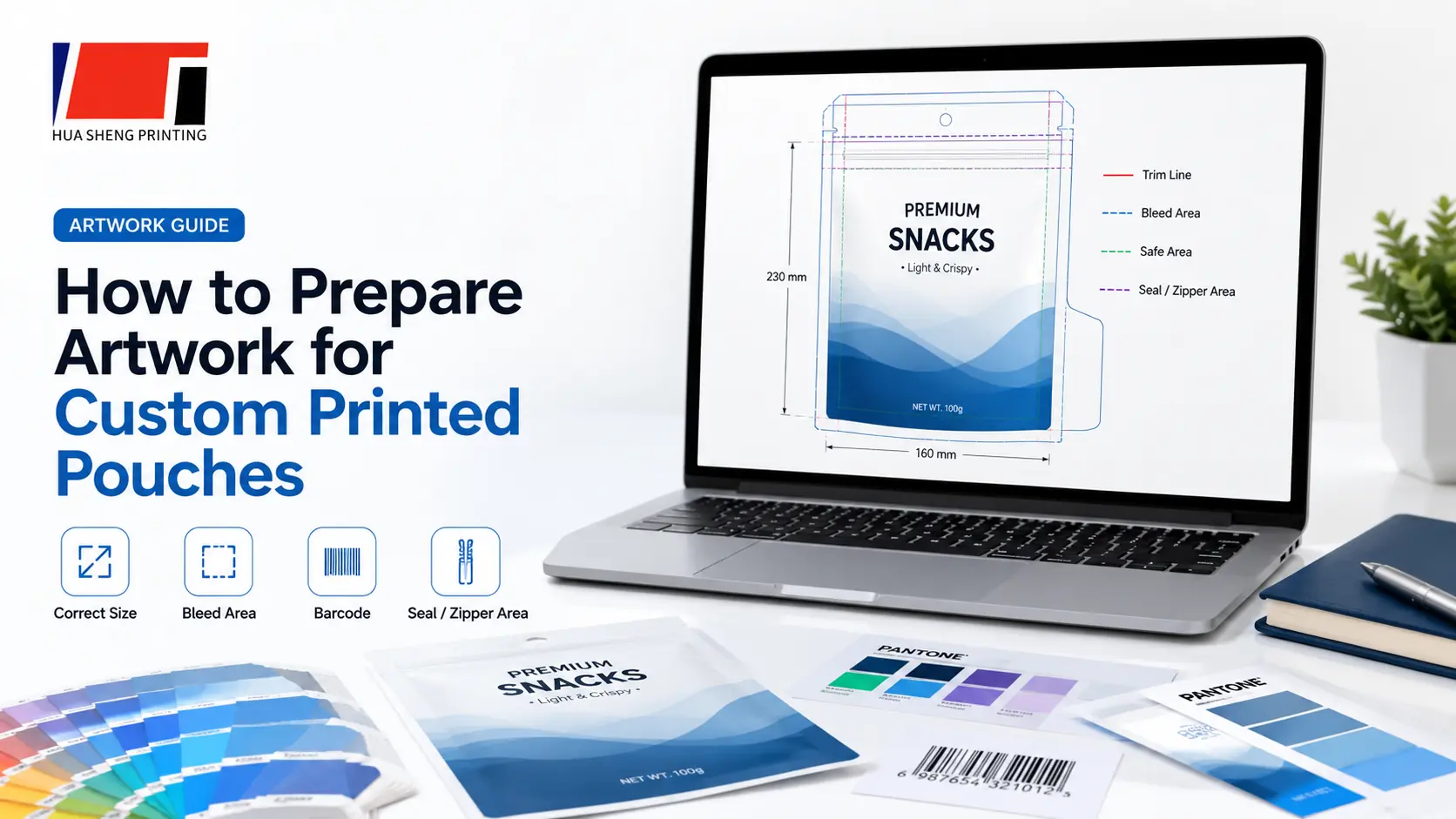 Technical guide visual for Gravure Printing Guide for Custom Flexible Packaging.
Huasheng Packaging focuses on gravure printing for custom flexible packaging. Learn cylinder cost, MOQ, color stability and why digital printing is only discussed as a market comparison.
Direct answer
When ordering custom printed flexible packaging, one common question is whether to use gravure printing or digital printing. Huasheng Packaging focuses on rotogravure printing for custom flexible packaging. Digital printing is discussed here only as a market comparison, not as a service offered by Huasheng Packaging. This guide helps buyers understand why gravure is usually selected for stable, repeatable pouch and roll film orders.
Evidence-reviewed technical guide
2026-08-21 · Huasheng Packaging Technical Content Review
Evidence scope
Named production architectures and normalized job assumptions for supplier-specific comparison.
Scope and limitations
Manufacturer pages do not establish a universal break-even quantity, quality ranking, lead time, cost or environmental advantage.
Key takeaways
- Compare the same artwork and conversion scope.
- Separate setup, proof, material, conversion and delivery assumptions.
- Approve the converted package, not the press name.
What Is Gravure Printing
Gravure transfers ink from engraved cylinders on a configured press. It is one production route for printed flexible packaging, but the press family alone does not establish Huasheng capacity, a universal run-length threshold, colour result, cost advantage or lead time. Compare the actual job configuration, substrate, artwork, colour-control plan, conversion scope and approved sample.
What Is Digital Printing
Digital flexible-packaging platforms print from digital job data without conventional gravure cylinders and can support on-demand production. Huasheng does not present digital printing as an in-house service on this route. A named platform does not prove that every short run is faster, cheaper, more consistent or more sustainable; buyers must obtain a supplier-specific quotation and converted-sample evidence.
Gravure vs Digital Printing Comparison
There is no responsible universal break-even quantity. Compare the same construction, dimensions, artwork versions, colours and finishes, proof stage, inspection method, conversion, logistics and repeat-order assumptions. Separate cylinders or setup, material and conversion minimums, revision costs and delivery scope. Choose the route with the smallest unresolved risk for the named project, then record which changes require a new comparison.
Why Gravure Printing Has Cylinder Cost
Gravure cylinders are job-specific production tooling, but cost, ownership, storage, reuse, revision and replacement terms vary by supplier and quotation. Do not infer the cylinder count, price or reuse entitlement from colour count alone. The commercial record should identify artwork version, dimensions, tooling scope, approved proof, ownership or retention terms and the changes that invalidate reuse.
Packaging Printing Process Overview
Understanding the printing production process helps buyers plan timelines and prepare correct information:
1. Artwork checking — design file review for print feasibility, color separation and dieline alignment.
2. Cylinder making and sample confirmation — cylinder engraving and project-based artwork, color or pre-production sample confirmation.
3. Material preparation — sourcing and preparing film, aluminum foil, kraft paper and adhesives.
4. Printing — gravure printing on high-speed presses; each color printed in sequence.
5. Lamination — bonding printed film with barrier and sealing layers.
6. Curing — allowing laminated film to stabilise at controlled temperature.
7. Slitting or bag making — cutting roll film to width or forming into finished pouches.
8. QC inspection — sealing strength, lamination strength, print registration, dimensions and visual checks.
9. Packing and handover — protective packing, carton labeling and project handover arrangement.
Typical total lead time from artwork confirmation: 15-30 working days depending on complexity.
Choose the print route from one controlled job brief: approved substrate and construction, web width and repeat, artwork count, colours and special finishes, variable-data need, proof stage, expected quantity by artwork, repeat-order pattern, conversion route, inspection criteria and delivery scope. Gravure uses configured presses, print units and cylinders; digital flexible-packaging platforms can support on-demand production. Those facts do not create a universal break-even quantity, quality ranking, lead time or environmental claim.
Compare supplier-specific quotations and evidence instead. Separate cylinders or setup, proofing, material and conversion minimums, waste assumptions, colour-control method, revision cost and logistics. Approve the same artwork under controlled viewing conditions and then inspect the converted package, because a press proof does not approve lamination, sealing, registration after conversion or machine performance. Record the selected route, rejected alternative and assumptions that would trigger a new comparison.
Related Products
Related Packaging Guides
Claim-to-source evidence matrix
| Reviewed claim | Support | Sources | Boundary |
|---|
| Gravure production uses configured presses, print units and cylinders. | direct | [1] | A named press does not define Huasheng cost, capacity or quality. |
| A named digital platform supports on-demand flexible-packaging production. | direct | [2] | This does not establish a universal run-length threshold or supplier capability. |
| Delivery cost and risk allocation changes with the selected Incoterm. | direct | [3] | Incoterms do not replace the full quotation or contract. |
JSON · CSV
Authoritative References
- Gravure Printing Presses · BOBST · manufacturer-data
Gravure production uses configured presses, print units and cylinders - Digital Flexible Packaging Printing Solutions · HP · manufacturer-data
A named digital platform supports on-demand flexible-packaging production - Incoterms 2020 Rules · International Chamber of Commerce · technical-organization
Incoterms allocate delivery tasks, costs and risks between buyer and seller
Frequently Asked Questions
Is gravure printing suitable for food packaging?
Yes. Gravure printing is widely used for food flexible packaging including roll film, pouches, coffee bags and spout pouches. Food-grade inks and materials are used, and the process supports the barrier and sealing requirements of food packaging.
Why is cylinder cost required for gravure printing?
Each printing color requires an engraved metal cylinder. Cylinders are custom-made for each design and represent the setup cost for gravure printing. They are reusable for repeat orders of the same design at no additional cost.
Can cylinder cost be reused for repeat orders?
Yes. Once cylinders are made, they are stored at the factory and reused for future repeat orders using the same design and dimensions. No additional cylinder cost applies for repeat orders.
Is digital printing better for small orders?
Huasheng Packaging does not provide digital printing production. For very small quantities, buyers may compare dedicated digital printing suppliers, but for repeatable custom pouch or roll film orders, gravure is usually more cost-effective and stable over time.
Which printing method is better for bulk orders?
Gravure printing is generally better for bulk orders because unit cost decreases as quantity increases, and color consistency is very stable across long production runs. The cylinder cost is amortized over the larger volume.
What file format is needed for custom printed packaging?
AI, PDF and CDR are the recommended file formats. Files should include dieline, bleed area, CMYK color mode and outlined fonts. JPG and PNG can be used for reference but are not suitable as final printing files.